
Snugg is a fast-growing Scottish startup committed to making home energy efficiency simple and affordable for everyone. We’re helping UK homeowners reduce their carbon footprint and save on bills—one home at a time.
Switching to an electric vehicle changes more than what's under the bonnet. It changes how you drive, how you charge, and how much you spend on getting around each month. With the ban on new petrol and diesel car sales approaching, and running costs pulling further ahead of petrol, more UK households are weighing up the switch. This guide covers what to consider before you do, and how it could affect your home energy bills.
In this guide, we cover:
- What is an electric vehicle?
- Five questions to ask before switching to an EV
- Are electric vehicles worth it?
- How far can you drive on a single charge?
- Are electric vehicles better for the environment?
- Charging an EV at home
- How does Snugg show you the impact of upgrading to an EV?
- Electric vehicle FAQs
What is an electric vehicle?
An electric vehicle (EV) runs on one or more electric motors powered by a rechargeable battery, rather than an internal combustion engine burning petrol or diesel. Instead of filling up at a petrol station, you charge the battery at home, at work or at a public charging point, and the car uses that stored electricity to drive.
Most fully electric cars on the market today are what's known as battery electric vehicles (BEVs), meaning they run entirely on electricity with no petrol engine at all. You may also come across plug-in hybrids (PHEVs), which combine a smaller battery and electric motor with a traditional engine. These can be a useful steppingstone, but they don't offer the same running cost or environmental benefits as a fully electric car.
Five questions to ask before switching to an EV
- How far do you typically drive? If most of your journeys are short, local trips, range is unlikely to be a concern for almost any EV on the market. If you regularly drive long distances, it's worth checking a model's real-world range, not just the manufacturer's figure, against your typical journey length.
- Can you charge at home? Home charging is where EVs make the most financial sense, since it's typically far cheaper than public charging. If you have off street parking, this is straightforward. If you rely on street parking, it's worth researching what's available nearby before you commit.
- What's your budget, upfront and ongoing? Electric vehicles have historically cost more upfront than equivalent petrol models, though this gap has been narrowing, particularly for used EVs. Running costs, on the other hand, are usually much lower, so it's worth looking at the total cost over a few years rather than the sticker price alone. It's also worth checking whether your employer offers an EV salary sacrifice scheme. You lease the car through your employer and the payments come out of your salary before income tax and National Insurance. As company car tax on EVs is low, this often works out cheaper than leasing the same car yourself.
- Do you tow, or carry heavy loads regularly? Towing reduces an EV's range more noticeably than it does for a petrol or diesel car. If this is a regular part of how you use your vehicle, it's worth checking a specific model's towing range rather than assuming.
- How long do you plan to keep the car? If you're planning to keep a car for many years, the case for switching now is stronger, since running costs and reliability data keep improving in EVs' favour over time.
Are electric vehicles worth it?
This comes down to weighing the upfront cost against the running costs. Electric vehicles are typically cheaper to run than petrol or diesel equivalents. Electricity costs less per mile than petrol, especially if you charge at home overnight on a cheaper tariff, and EVs also tend to cost less to maintain, since they have far fewer moving parts than a combustion engine. There's no oil to change, fewer fluids, and less wear on components like brakes, thanks to regenerative braking, which uses the motor to slow the car and recovers some energy back into the battery.
The upfront cost is still typically higher than a comparable petrol car, particularly for new vehicles, though this varies a lot by model, and the used EV market has grown a great deal, which brings the entry cost down considerably. Over a typical ownership period, many drivers find the lower running costs outweigh the higher purchase price, but it depends on how many miles you drive each year, since fuel and maintenance savings add up faster the more you drive.
How far can you drive on a single charge?
Range varies by model, battery size and driving conditions. As a general guide, most new electric cars on the market now offer a real-world range that comfortably covers day to day driving and the vast majority of UK car journeys, which tend to be short. Motorway driving, cold weather and towing all reduce range compared with a manufacturer's official figure, so it's worth checking independent, real world test results for a specific model rather than relying on the headline number alone.
For most households, range anxiety is more of a perception problem than a practical one. The average UK car journey is well within what a modern EV can comfortably manage on a single charge. It becomes more of a genuine consideration if you regularly drive long distances without reliable charging along the way.
Are electric vehicles better for the environment?
Generally, yes, though the full picture is more nuanced than zero emissions. An EV produces no tailpipe emissions at all, which matters a great deal for local air quality, particularly in towns and cities. Over its full lifetime, an EV also tends to produce meaningfully lower total emissions than an equivalent petrol or diesel car, even accounting for the emissions involved in manufacturing the battery, though that manufacturing footprint is real, and it's a fair point for sceptics to raise.
As the UK's electricity grid continues to shift towards renewable generation, the lifetime emissions advantage of running an EV improves further, since the electricity charging the car gets cleaner over time in a way that petrol never will.
Charging an EV at home
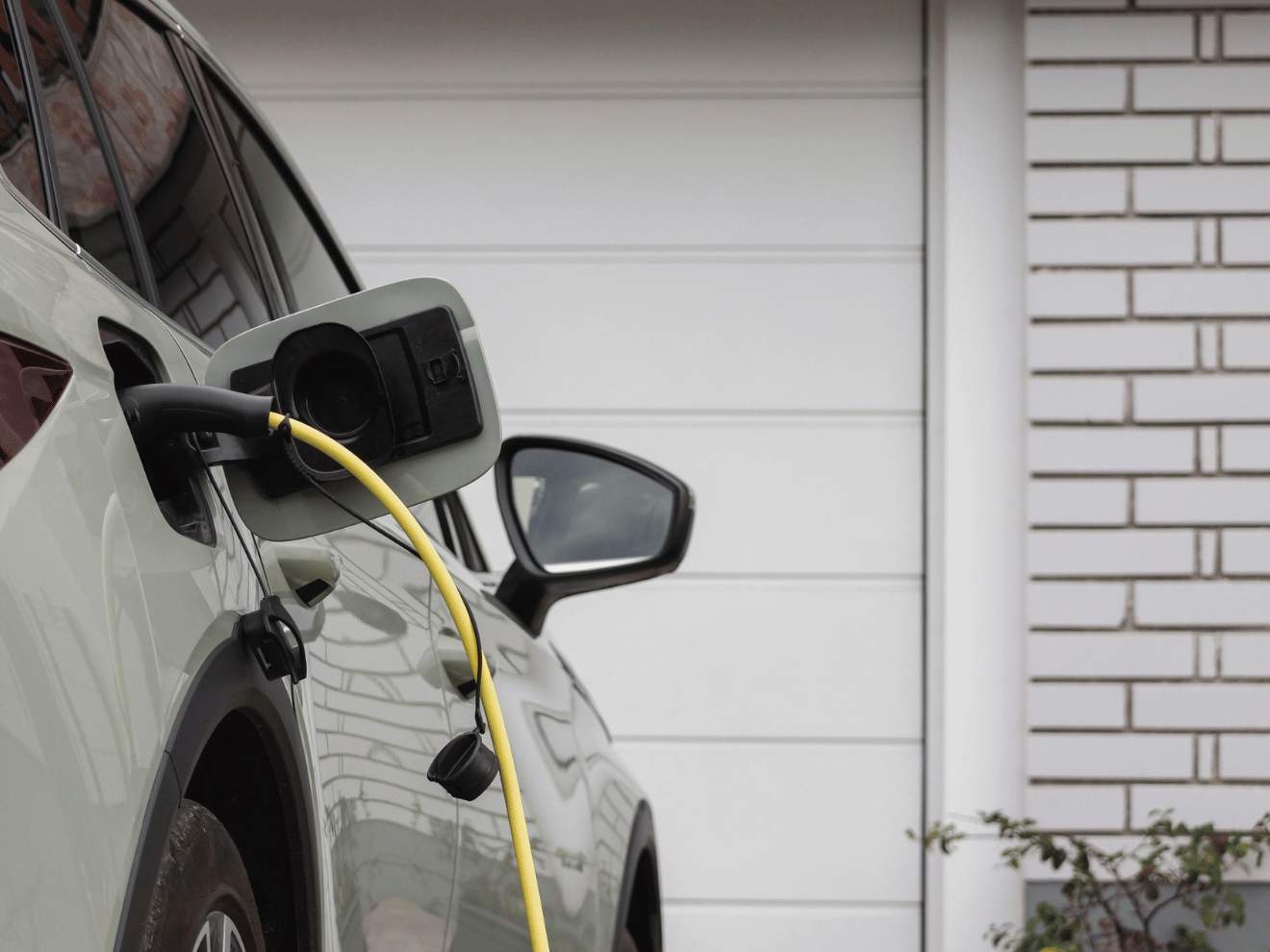
Most EV owners charge at home overnight when electricity is cheaper, and the car has time to charge fully before the next day's driving. A standard home charging setup will fully charge a typical EV battery overnight, and even a slower connection is usually enough if the car is plugged in for several hours.
Charging costs depend a lot on your tariff. Charging overnight on a standard flat tariff already costs meaningfully less per mile than petrol but pairing an EV with a smart or EV specific tariff, which offers a much lower rate during off peak hours, can bring the cost down even further. This is a good example of how the improvements in your Snugg platform work together: an EV alongside the right tariff, not either one in isolation. For more on how these tariffs work, see our smart tariffs guide.
An EV tariff can also make your next upgrade better value. Some EV tariffs apply their cheap overnight rate to your whole home, not just your car. So, anything else you run overnight costs less too, from the washing machine to a home battery that charges while you sleep and then powers your home through the pricier evening peak. That makes an EV a natural first step towards a more electrified home, where each upgrade helps the next one save you more.
How does Snugg show you the impact of upgrading to an EV?
The Snugg platform shows you what upgrading to an EV would mean for your home, not just the cost of the car, but the effect on your energy bills once you're charging at home. If you don't already own a vehicle, you can skip this step entirely. If you do, we use details like your car's size and how far you typically drive to estimate the difference an EV would make, alongside everything else already in your plan, so you can see the full picture rather than looking at the car on its own.
_________________________________________________________________
Get started with Snugg and start saving on your energy bills.
Check grants, find trusted installers and work out the best way to pay, so you can start saving on your energy bills.


Electric vehicle FAQs
Generally, yes. Electricity costs less per mile than petrol, particularly if you charge at home overnight, and EVs typically cost less to maintain due to having fewer moving parts.
It varies by model, but most new EVs now offer a real-world range that comfortably covers typical UK driving. Motorway driving, cold weather and towing all reduce range compared with the manufacturer's headline figure.
You don't strictly need one, but home charging is where EVs offer the best value, since it's typically far cheaper than public charging. If you can't charge at home, it's worth researching public charging options near you before you switch. You may also be able to get a government grant towards the cost of installing a home charger, depending on your circumstances. It's worth checking what's currently available before you book an installer.
Generally, yes, both for local air quality, since there are no tailpipe emissions, and for lifetime carbon emissions, though manufacturing an EV's battery does carry its own environmental footprint.
It depends on your tariff and your car's battery size, but charging overnight, especially on a smart or EV tariff with a low off peak rate, is typically far cheaper than the equivalent cost in petrol.
Reliability data has generally improved as EVs have become more established, and with fewer moving parts than a combustion engine, there's less to go wrong mechanically. Battery health over the long term is still a fair question to ask about any specific model.
The UK government has set out plans to phase out sales of new petrol and diesel cars, with continued sales of hybrids for a further period after that. It doesn't affect cars already on the road, but it's a strong signal of the direction the market is heading.